5 min read
Same-Day Surgical Instrument Tracking for ASCs in 2026
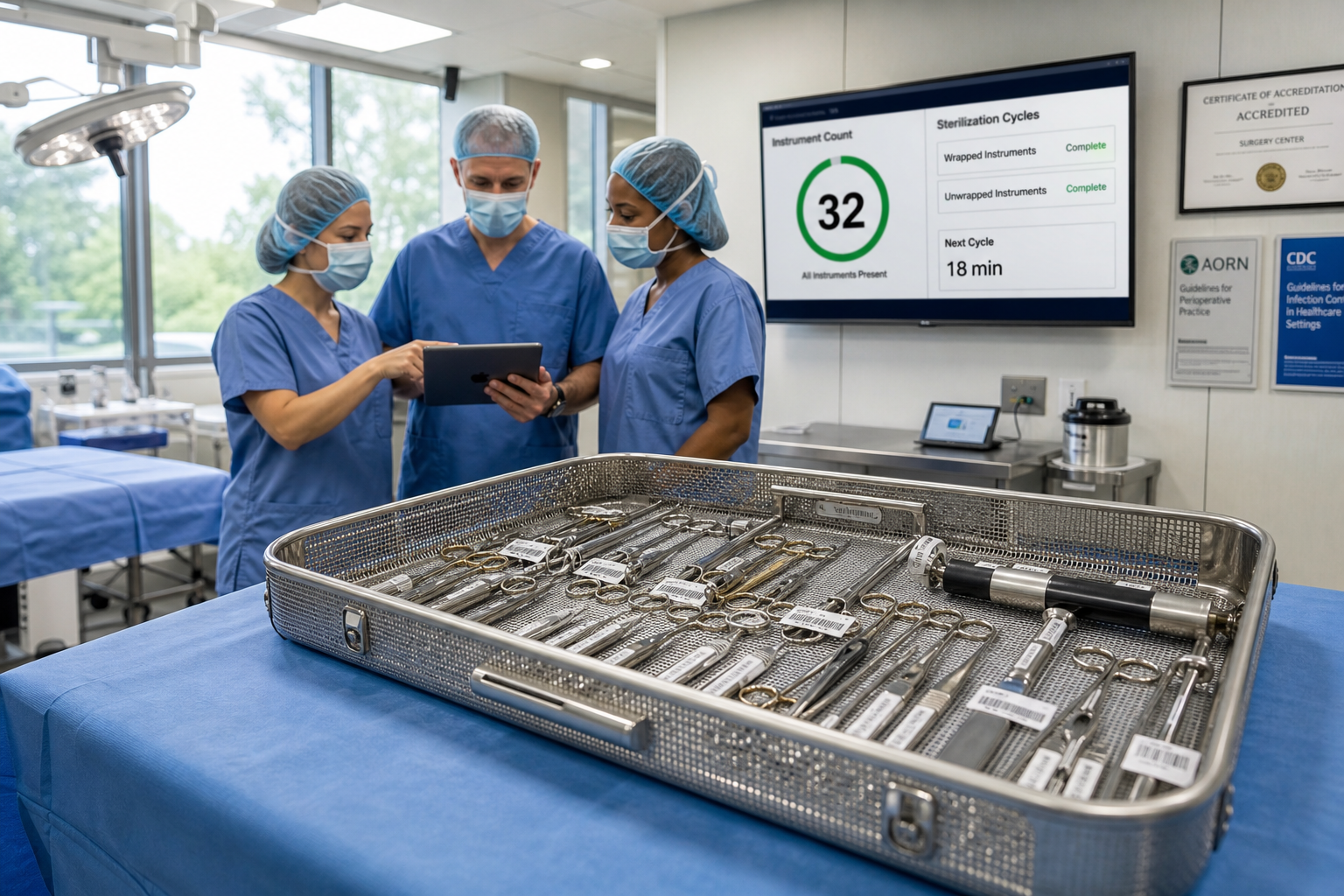
Your ASC or small hospital runs a tight schedule. Every tray, every instrument, every sterilization cycle matters to the patients on your OR table...
If your team cannot see where trays are, what is ready, and what needs attention next, surgical instrument tracking becomes guesswork. That gap shows up in delayed cases, missing sets, and extra work across SPD and the OR.
Settrax Flow gives you live visibility into instruments, cycles, and staff activity so you can make decisions earlier. This article explains where visibility breaks down, what better tracking looks like, and how to evaluate a platform built for sterile processing.
SPD teams need current tray status to keep work moving. When status is scattered across clipboards, separate systems, and hallway check ins, your team loses time confirming what is already sterilized, assembled, or assigned.
That lack of visibility reaches the OR quickly. A tray that is late, incomplete, or hard to locate can disrupt case prep, increase rework, and put more pressure on technicians who are already managing a heavy workload.
A 2025 industry benchmark report found that many sterile processing and OR leaders still struggle with human error, inventory readiness, and incomplete live data. That is why visibility is not just a reporting need. It is an operational requirement.
Tracking gaps usually start at handoff points. Decontamination, assembly, sterilization, storage, and case staging each create a moment when tray status can fall behind the work happening on the floor.
The same problem appears when hospital owned sets and loaner trays live in different records. Your staff may know the work is done, but your department still lacks one current view of what is ready for the case.
Settrax Flow records each step from decontamination through case assignment so your team can see tray status in one place. Instead of chasing updates, you can check the workflow and act on what needs attention now.
The platform is built for hospital owned and loaner instruments, which helps your team follow both paths in the same operational view. That matters when trays move between departments and timing affects whether a case starts as planned.
Settrax also states that Flow supports a complete chain of custody, immediate recall identification, audit ready reporting, and OR schedule integration on its product page. Those capabilities connect daily workflow tracking to compliance and case readiness.
Visibility is more useful when it shows not only where instruments are, but how work is moving. Leaders need to know which areas are slowing down, which trays are waiting, and where staff capacity is getting stretched.
Settrax positions Flow around the technician workflow and highlights analytics on instruments, cycles, and staff performance. That gives you a clearer view of throughput and helps you address bottlenecks before they affect the OR schedule.
Staffing pressure is one of the hardest operating issues SPD and OR leaders face. When experienced technicians leave, the department loses speed, consistency, and practical knowledge that is difficult to replace during busy surgical schedules.
Settrax Flow addresses that issue directly by designing the platform around the technician workflow, not just the instrument count. On the product page, Settrax says the system supports recognition and rewards, automatic work logging, and performance visibility that helps staff advocate for themselves.
That matters for managers too. Recognition often breaks down because supervisors do not have time to collect the data, verify the work, and turn it into a repeatable process. Settrax Flow gives managers a more automated way to identify high performing staff and support recognition without adding another manual task.
Interface design affects throughput more than many teams expect. When technicians have to click through deep menus to reach common tasks, small delays repeat across the shift and add friction to work that already moves quickly.
Settrax Flow positions its interface as co designed with working SPD technicians and built around the technician workflow. That supports a simpler path to common functions, helps users spend less time navigating the software, and keeps attention on the work happening in SPD and the OR.
For managers, that design choice matters because adoption is easier when the system follows the way staff already work. Reducing click fatigue helps experienced technicians move faster and makes it easier for newer team members to stay consistent.
Loaner instruments create extra coordination because they arrive from outside your facility and still need the same accountability once they enter SPD. If those trays are tracked somewhere else, your team works with an incomplete record.
Settrax VM and the broader Settrax platform connect vendor activity to the case workflow, while Flow keeps the instrument record visible inside SPD. That shared context helps your team know what arrived, what is being processed, and what should be ready next.
The first requirement is live status across the full workflow. If you cannot see tray location, sterilization progress, and case readiness in one place, your staff will keep relying on side processes to fill the gap.
The second requirement is workflow fit. Settrax solutions focus on structured workflow, audit visibility, and EHR connected operations. Your tracking platform should support the way SPD and OR teams already work, while giving leaders better operational control.
The third requirement is reporting that helps during audits and daily management. You need records that explain what happened, who handled the set, and when the status changed so your team can answer questions without slowing the department down.
Instrument accountability depends on knowing what is happening now, not after the case starts. When your team has a live view of trays, cycles, handoffs, and staff activity, you can reduce uncertainty and keep work moving toward the OR.
Settrax Go extends the same tracking approach to smaller facilities, while Flow is positioned for broader SPD operations. If you are reviewing options, ask whether the platform helps you support retention, recognize strong work, and act before delays happen.
Surgical instrument tracking in SPD is the process of recording where trays and instruments are as they move through decontamination, assembly, sterilization, storage, and case assignment.
This helps you confirm readiness, maintain accountability, and respond faster when a tray needs attention before a procedure.
Settrax Flow helps you track hospital owned and loaner instruments, tray status, sterilization activity, and workflow progress in one system.
This gives your team a clearer operational view and supports decisions that affect case readiness and audit documentation.
Loaner trays create tracking problems because they enter your facility from outside partners and often follow a separate record path from hospital owned sets.
Settrax Flow helps reduce that gap by keeping both types of instruments visible in the same workflow.
SPD leaders can use Settrax Flow analytics to review throughput, identify bottlenecks, and monitor staff activity tied to the work moving through the department.
This helps you address delays earlier and recognize strong performance with better context.
Settrax Flow supports staffing and retention by giving managers visibility into work performed and by building recognition into the daily workflow.
Settrax says Flow includes performance visibility, automatic work logging, and recognition tools that help managers reward strong work with less manual effort.
Settrax Flow reduces click fatigue by centering the interface around the technician workflow and making common tasks easier to reach.
Settrax describes the interface as co designed with SPD technicians, which supports faster navigation during busy shifts.
Yes. Settrax connects instrument tracking with broader operational workflows across its platform, including vendor coordination and related case activity.
That connection helps your team work from one source of truth instead of piecing together updates from separate records.
5 min read
Your ASC or small hospital runs a tight schedule. Every tray, every instrument, every sterilization cycle matters to the patients on your OR table...
6 min read
Hospitals have managed medical device vendor coordination the same way for over 40 years: phone tag, paper logs, and email chains. Compliance data...