5 min read
Same-Day Surgical Instrument Tracking for ASCs in 2026
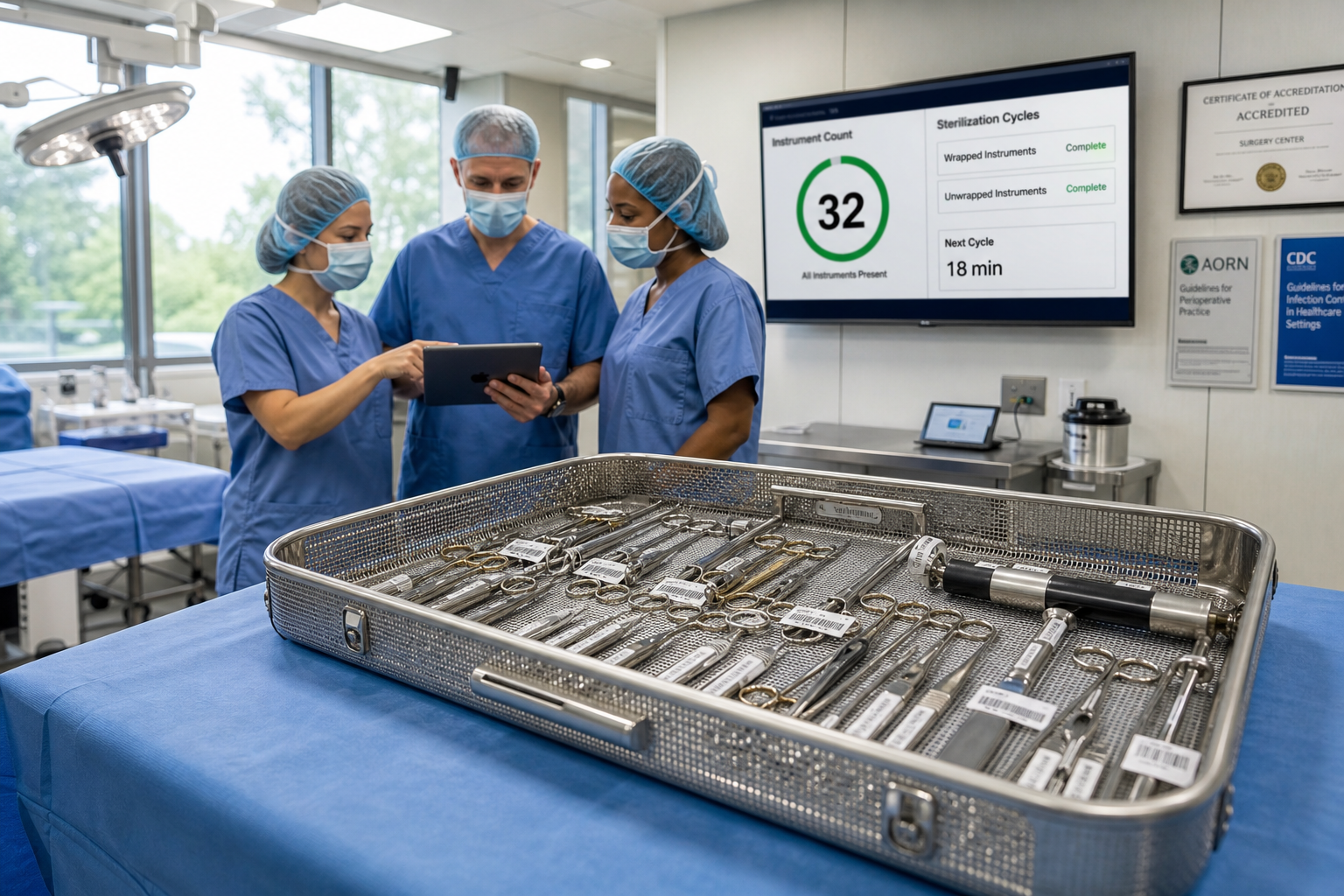
Your ASC or small hospital runs a tight schedule. Every tray, every instrument, every sterilization cycle matters to the patients on your OR table...
Hospitals have managed medical device vendor coordination the same way for over 40 years: phone tag, paper logs, and email chains. Compliance data sat scattered across departments, and OR teams waited for instruments that may or may not show up. For sterile processing leaders, every untracked tray was not a logistics inconvenience. It was a patient safety gap with no reliable fix.
Settrax changed that equation by creating the first vendor-driven process for hospital vendor management. Over 15 years later, Settrax is expanding into new product areas with the same design philosophy that made it a category leader. Here is why vendor management stayed broken for so long, how a vendor-driven approach fixed it, and what Settrax's expansion into new products means for your sterile processing department.
Before dedicated hospital vendor management systems existed, hospitals cobbled together clipboards, spreadsheets, and phone trees to coordinate with medical device vendors. Sterile processing departments tracked loaner trays by hand. OR coordinators emailed vendors about upcoming cases and hoped for timely responses. Compliance documentation arrived on its own schedule, if it arrived at all.
The root problem was structural. As a Becker's Hospital Review analysis noted, vendor operations have rarely been treated as a unified operational discipline. Hospitals carried full responsibility for collecting and verifying data from vendors who had no standardized obligation to provide it. That one-sided burden grew heavier as surgical volume increased and device complexity expanded.
Medical device vendors bringing instruments and implants into hospitals operated under varying credentialing standards. Each facility set its own policies, and vendors submitted documentation in whatever format they preferred. Some faxed paperwork. Others dropped off paper logs at the front desk. A few used email.
None of these methods created a reliable, centralized record. When Joint Commission inspectors walked in, sterile processing managers had to reconstruct compliance histories from fragments spread across filing cabinets, inboxes, and shared drives. The data existed somewhere. Assembling it into audit-ready documentation consumed days of staff time that could have been spent on case preparation.
Incomplete vendor compliance data meant hospitals could not verify that every instrument entering the OR met sterilization and credentialing requirements. Missing instruments were discovered after vendors had already left the building. Billing disputes piled up because usage records did not match what finance teams received.
For sterile processing leaders, this meant constant firefighting. Staff spent hours reconciling vendor records instead of focusing on instrument processing and case preparation. The manual processes were not just slow. They were creating gaps in patient safety workflows that no amount of additional staffing could close.
Settrax was the first vendor management company to give hospitals a way to manage their medical device vendors by putting the compliance burden where it belonged: on the vendors. Instead of asking hospital staff to chase down documentation, Settrax built a process where vendors captured the required data themselves as part of their standard workflow.
That shift addressed the core structural failure that had cost hospitals over 40 years of incomplete records, lost instruments, and preventable billing disputes.
The Settrax process starts before the vendor arrives. OR schedules sync automatically from Epic, Cerner, or other EHR systems into the Settrax VM platform. Vendors receive notification of upcoming cases, arrival expectations, and required instrument manifests. The workflow is structured, direct, and visible to everyone involved.
When vendors arrive, they check in and check out their own instrument sets at a Settrax kiosk, independently. Badge scanning and guided workflows capture every data point the hospital needs for compliance, including tray counts, instrument manifests, and credentialing verification. At check-out, the system automatically compares what leaves against what was checked in and flags missing instruments in real time.
The results are measurable. Hospitals using Settrax VM report a 90% or greater reduction in missing instrument incidents within 90 days of deployment. That is what happens when compliance data collection shifts from a manual hospital responsibility to an automated vendor-driven workflow.
Sterile processing teams recovered hours previously spent on follow-up, reconciliation, and status chasing. SPD technicians could focus on preparing instruments for surgery and making sure every tray reaching the OR is complete, sterile, and accounted for. Every one of those instruments is going to be used on a patient.
Settrax has been the leader in vendor management for the past 15 years. That tenure represents a depth of operational data, workflow refinement, and clinical partnership that newer entrants do not have.
Over 4.1 million instruments are tracked monthly through the Settrax platform. The system maintains a 99.97% instrument accountability rate. Those numbers were built through years of working alongside sterile processing departments, OR teams, and vendor partners at facilities like Providence St. Joseph, CommonSpirit, and the University of Washington.
For sterile processing leaders evaluating hospital vendor management systems today, longevity matters. A vendor management platform built on 15 years of real-world hospital data handles edge cases, compliance exceptions, and workflow variations that newer products have not encountered yet.
Settrax's compliance scoring and reporting capabilities reflect patterns identified across thousands of vendor interactions. The platform does not just track whether a vendor checked in. It measures adherence to arrival windows, documentation completeness, and tray handling policies, giving hospitals the data they need to hold vendors accountable and maintain daily inspection readiness.
Now over 15 years old, Settrax is moving into new areas of healthcare. The expansion builds on the same design philosophy that defined the vendor management platform: make the process intuitive, put it in the hands of the people doing the work, and automate everything that does not require clinical judgment.
Settrax FLOW brings enterprise surgical instrument tracking directly to sterile processing teams. The platform provides real-time visibility into every tray and instrument from sterilization through case assignment, with analytics on staff production and performance.
It was built specifically around SPD technicians, not administrators. For 30 years, legacy tracking software was built to make audits easier, not to make technicians' days easier. Settrax FLOW inverts that priority.
Settrax Bill Only addresses another persistent hospital pain point: surgical implant billing. The module integrates with Settrax VM and FLOW to unify case data, instrument tracking, and vendor records for more accurate and automated purchase orders.
Instead of paper, email, and manual call-based coordination for surgical implant billing, your hospital gets a structured workflow where vendors submit usage through a guided digital form. No more paper, no more emails, no more chasing records.
Settrax Go extends the platform to ambulatory surgery centers and small hospitals that need full-grade instrument tracking without a lengthy implementation. Purchase online, receive pre-configured hardware, go live. Every feature is included from day one.
Across every new product, the pricing model reflects the same transparency that defined the original vendor management platform. Predictable per-bed or per-OR pricing. No long-term lock-in. Transparent pricing at every step. Free migration from legacy systems.
The average Settrax FLOW customer saves 40 to 60% compared to their previous system. We built it smarter. We price it fairly. You keep the difference.
Hospital vendor management rewards operational clarity. Settrax proved more than 15 years ago that a vendor-driven process could shift compliance responsibility to the vendors and give hospitals real-time visibility into every instrument, every case, and every interaction.
That clarity now extends across the full Settrax product lineup. From surgical instrument tracking to bill-only workflows to launching a new surgery center, the underlying principle is the same: your staff deserves better software, your patients deserve better outcomes, and your budget deserves a break. Talk to the Settrax team to see how it applies to your facility.
Hospital vendor management is the process of coordinating, tracking, and ensuring compliance for medical device vendors who bring instruments and implants into a hospital. It covers credentialing, check-in and check-out workflows, instrument accountability, and usage documentation. Settrax automates this entire process through a vendor-driven workflow that captures compliance data without requiring hospital staff involvement.
Vendor-driven compliance shifts the responsibility for capturing required data from hospital staff to the vendors themselves. This reduces manual work, improves data accuracy, and ensures compliance documentation is complete before instruments reach the OR. Settrax created this approach to address the 40-year gap in hospital compliance data collection.
Settrax FLOW tracks every tray and instrument from sterilization through case assignment, providing real-time analytics on instrument status and staff performance. The platform covers both hospital-owned and loaner instruments, giving sterile processing teams full visibility across the entire workflow.
Yes. Settrax Go is a turnkey version of the platform built specifically for ambulatory surgery centers and small hospitals. It includes full functionality with pre-configured hardware and self-service configuration. Facilities can go live with instrument tracking the same day they receive their equipment.
Settrax Bill Only integrates with Settrax VM and FLOW to unify case data, instrument tracking, and vendor records into a single billing workflow. Vendors submit usage through a guided digital form, and the system generates purchase orders based on actual instruments used in the OR, reducing errors and disputes.
5 min read
Your ASC or small hospital runs a tight schedule. Every tray, every instrument, every sterilization cycle matters to the patients on your OR table...
5 min read
If your team cannot see where trays are, what is ready, and what needs attention next, surgical instrument tracking becomes guesswork. That gap shows...