9 min read
6 Best Vendor Tray Software for Fast Deployment (2026)

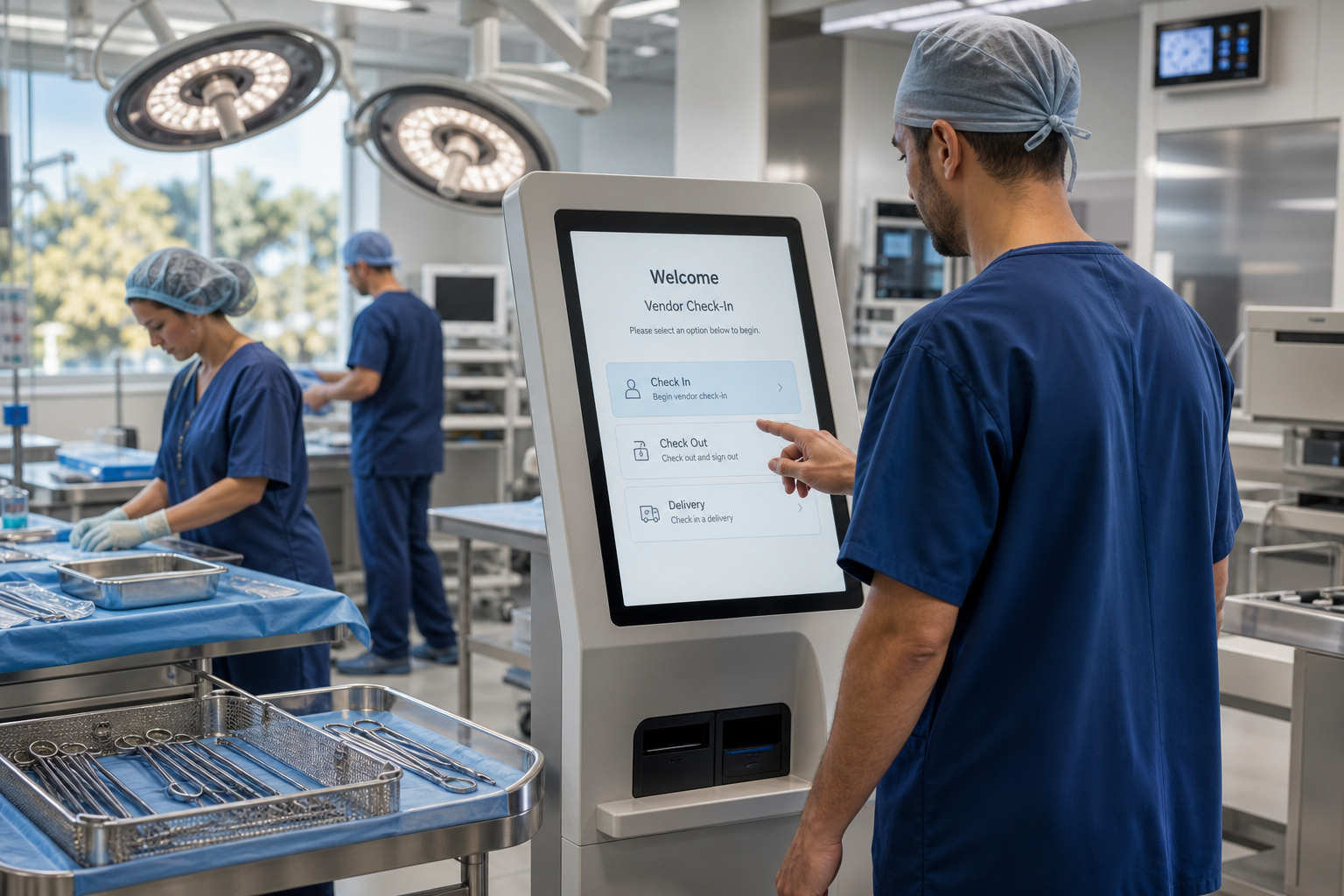
Your OR schedule is locked. The vendor rep confirmed the case. But the loaner trays? Still sitting at a distribution center because the software your team relies on took nine months to deploy. Vendor tray management software is supposed to solve coordination problems, not create new ones. Settrax gives hospitals and device reps a shared platform built for same-day deployment and real-time tray visibility.
This comparison breaks down six vendor tray platforms by what actually matters to surgical operations leaders: how fast you can go live, how much friction your vendor reps face during onboarding, and how well the software fits your OR and sterile processing workflows.
Quick guide: 6 best vendor tray software for hospital teams
- Settrax VM: The best vendor tray management platform for hospitals that need EMR-integrated case coordination, vendor scorecards, carrier tracking, same-day deployment and automated vendor coordination. Best all around.
- ReadySet Surgical: Focused loaner tray coordination with vendor scorecards and carrier tracking
- Censis LoanerLink: Loaner tray scheduling that connects to the CensiTrac instrument tracking suite
- Casechek: EMR-integrated case coordination covering procurement through bill-only payment
- Mobile Aspects: RFID-driven tissue and implant tracking with automated dispensing cabinet workflows
- STERIS SPM Loaner Solution: Loaner tray management embedded in the broader SPM workflow suite
How we chose the best vendor tray software for surgical teams
Choosing vendor tray software affects every handoff between your SPD, OR, vendors, and finance team. We evaluated these platforms based on how well they reduce friction at each of those handoff points, not just on feature checklists.
- Deployment speed: How quickly can your team go from purchase to first tracked case? Long implementations delay the accountability your department needs now.
- Vendor onboarding friction: Does the platform require extensive vendor training, or can reps check in and check out independently on day one?
- EMR integration depth: Pulling surgical schedules directly from Epic, Cerner, or another EHR eliminates manual data entry and keeps vendor notifications accurate.
- Missing instrument detection: Catching discrepancies before a vendor leaves your facility prevents replacement costs and billing disputes downstream.
- Compliance and audit readiness: The platform should generate time-stamped audit trails that align with Joint Commission, AAMI, and CMS documentation requirements.
- Bill-only workflow support: Loaner billing is where most vendor tray coordination falls apart. Integrated bill-only capabilities prevent reconciliation bottlenecks.
The 6 best vendor tray software for hospital deployment
1. Settrax VM: Best overall vendor tray management for hospitals
Settrax VM connects your OR schedule directly to medical device vendors, automating case communication, kiosk-based check-in and check-out, compliance scoring, and missing instrument detection. The platform pulls surgical cases from Epic, Cerner, or your EHR automatically, then notifies vendors of upcoming cases with arrival windows and instrument manifests.
Where Settrax VM separates from every other platform on this list is deployment. Hospitals using Settrax Go can go live the same day they purchase, with pre-configured hardware shipped directly to the facility. No nine-month implementation timeline, no consultant kickoff, no waiting on someone to "circle back."
Vendors complete the entire check-in process at a self-service kiosk without hospital staff involvement. At checkout, Settrax VM cross-references every item checked in against what leaves. Discrepancies surface before the vendor walks out. Hospitals report a 90%+ reduction in missing instrument incidents within 90 days of deployment.
The Settrax Bill Only module is included at no additional cost, unifying vendor tray coordination with PO generation, contract validation, and payment reconciliation in one system.
Settrax VM features
- EMR schedule sync: Surgical cases flow from your EHR into Settrax VM automatically, enriching each case with vendor product requirements and eliminating manual coordination calls.
- Autonomous vendor kiosk: Device reps scan a badge and complete tray check-in independently. Your hospital staff are removed from the instrument intake workflow entirely.
- Checkout guard: Settrax VM compares every checkout against the original check-in record, flagging missing instruments before the rep leaves and before an invoice arrives.
- Compliance scoring: Every vendor interaction is measured against your hospital's standards. On-time arrival rates, instrument completeness, and policy adherence are tracked in real-time dashboards visible to both hospital and vendor.
- Same-day deployment: Purchase online, receive pre-configured hardware, and track your first case the same day. No implementation wait, no feature tiers, no hidden module costs.
- Integrated bill-only billing: PO generation, contract validation, usage capture, and payment reconciliation happen inside the same platform your team already uses for tray tracking.
Settrax VM pros and cons
| Pros | Cons |
|---|---|
| Same-day deployment with pre-configured hardware removes implementation delays | Facilities outside the U.S. and Canada may need to coordinate hardware shipping timelines |
| Autonomous vendor kiosk eliminates hospital staff involvement in check-in workflows | Your staff might get bored with all of the additional time they have now that Settrax has automated everything. |
| Bill-only module included at no additional cost, covering the full vendor billing cycle | Organizations using a different instrument tracking system would need to evaluate the integration path with their existing setup |
2. ReadySet Surgical: Dedicated loaner tray coordination with vendor scorecards
ReadySet Surgical focuses specifically on loaner tray logistics, connecting hospitals, OEMs, and device reps around case scheduling and tray delivery. The platform includes automated notifications for new cases and scheduling changes, plus an auto-assignment feature that notifies vendors of cases in advance.
ReadySet offers vendor scorecards that track delivery lead times, trays per case, and time to checkout. The platform integrates with EHR, ERP, and inventory systems through HL7 connections. ReadySet does not include a self-service vendor kiosk or built-in bill-only billing module.
ReadySet Surgical features
- Vendor scorecards: Individualized performance reports tracking delivery lead times, trays per case, and checkout timing across your vendor base.
- Carrier tracking: Real-time monitoring of inventory locations and arrival times, helping prevent tray delivery delays.
- EHR synchronization: HL7 integration syncs surgical schedules and updates with the ReadySet platform for vendor alignment.
ReadySet Surgical pros and cons
| Pros | Cons |
|---|---|
| Dedicated focus on loaner tray logistics and vendor coordination workflows | Does not include a self-service vendor check-in kiosk |
| Vendor scorecards provide data on delivery compliance and rep behavior | Bill-only billing workflows are not included in the platform |
| Direct integrations with OEMs for automated case notifications | Instrument-level tracking and sterile processing workflows require a separate system |
3. Censis LoanerLink: Loaner scheduling connected to the CensiTrac suite
Censis LoanerLink is a loaner tray management module that works alongside the CensiTrac instrument tracking platform. It communicates with hospital scheduling systems and vendors to provide real-time knowledge of scheduled cases, expected tray arrivals, and processing status.
LoanerLink gains additional value when paired with the full CensiTrac suite, which handles instrument-level traceability and sterilization cycle documentation. As a module within a larger platform, deployment timelines depend on the scope of your overall Censis implementation.
Censis LoanerLink features
- OR scheduler interface: Imports surgical schedules and links loaner tray needs to upcoming cases in real time.
- Vendor communication: Automated notifications and case status updates flow to vendors through the platform.
- CensiTrac integration: Connects loaner tray scheduling with instrument-level tracking and sterilization documentation across the broader Censis system.
Censis LoanerLink pros and cons
| Pros | Cons |
|---|---|
| Deep integration with CensiTrac creates a connected loaner and owned-instrument workflow | Full value requires investment in the broader CensiTrac platform |
| Real-time scheduling interface links loaner needs directly to OR demand | Deployment as part of a multi-module system typically involves a longer implementation timeline |
| Instrument-level traceability available through the parent CensiTrac suite | Vendor self-service check-in at a kiosk is not a standalone feature of LoanerLink |
4. Casechek: EMR-integrated vendor case coordination from procurement to payment
Casechek positions itself as an implant supply chain platform that manages vendor-supported procedures from case scheduling through bill-only payment. The platform integrates with hospital EHR systems to connect surgical schedules directly to vendor coordination and CSPD tray tracking.
Casechek includes vendor tray management, surgical case coordination, and a bill-only billing workflow. The platform reports an 82% reduction in manual labor for bill-only transactions in documented case studies. Casechek does not offer an autonomous vendor kiosk for self-service check-in.
Casechek features
- Surgical case coordination: EMR-integrated scheduling connects cases directly to vendor notifications, updates, and responses.
- Vendor tray tracking: CSPD visibility into tray processing status, with notifications to vendors on equipment readiness pre- and post-surgery.
- Bill-only workflow: Covers the implant billing cycle from procurement through PO submission with EHR-linked accuracy.
Casechek pros and cons
| Pros | Cons |
|---|---|
| Covers vendor coordination through bill-only payment in one platform | Does not offer a self-service vendor check-in kiosk |
| EMR integration automates case-to-vendor notifications | Instrument-level tracking and sterilization cycle documentation require a separate system |
| Documented reduction in manual labor for bill-only transaction workflows | Deployment scope for multi-site health systems has not been publicly detailed |
5. Mobile Aspects: RFID-driven tissue and implant tracking with cabinet workflows
Mobile Aspects focuses on tissue and implant tracking using RFID technology and automated dispensing cabinets. The iRISecure and TissueTrace modules provide chain-of-custody documentation, EHR integration with Epic and Cerner, and automated compliance logging for Joint Commission and FDA requirements.
The platform is purpose-built for tissue and high-cost implant inventory rather than full vendor tray coordination. Hospitals that need a broader vendor management workflow covering loaner trays, case coordination, and bill-only billing would need to pair Mobile Aspects with additional systems.
Mobile Aspects features
- RFID tracking: Barcode and RFID scanning automates tissue and implant documentation, reducing manual entry.
- EHR integration: Connects with Epic, Cerner, Workday, and other hospital systems for procedure-level data capture.
- Compliance logging: Generates Joint Commission and FDA/AATB-ready documentation for regulatory audits.
Mobile Aspects pros and cons
| Pros | Cons |
|---|---|
| RFID technology automates tissue and implant chain-of-custody documentation | Focused on tissue and implant inventory rather than full loaner tray management |
| Supports Joint Commission and FDA compliance logging out of the box | Vendor tray coordination, kiosk check-in, and bill-only billing are not core capabilities |
| Integrates with multiple EHR platforms for procedure-level data capture | Broader surgical supply chain workflows require additional systems alongside Mobile Aspects |
6. STERIS SPM Loaner Solution: Loaner management embedded in the SPM suite
STERIS SPM Loaner Solution is a module within the broader SPM Workflow Solution and Surgical Asset Tracking Software suite. SPM manages instrument tracking, sterilization documentation, and reprocessing workflows across the SPD and OR. The Loaner Solution adds vendor notification and loaner tray scheduling on top of that foundation.
SPM includes configurable workflows, AAMI-conforming documentation, and over 200 reporting templates. The loaner module's primary advantages emerge for hospitals already running SPM, where loaner and owned-instrument data lives in one system.
STERIS SPM features
- Vendor notifications: Automated alerts to vendors for scheduled cases, including expected arrival windows and tray requirements.
- AAMI-conforming documentation: Electronically stored records supporting audit readiness for sterile processing and reprocessing workflows.
- 200+ reports: Pre-built reporting templates covering instrument utilization, missing instruments, and processing metrics across the SPD.
STERIS SPM pros and cons
| Pros | Cons |
|---|---|
| Loaner tray data integrates with instrument tracking and sterilization workflows in one SPM suite | Full value requires adoption of the broader SPM platform |
| Configurable workflows allow hospitals to match SPM to internal policies and standards | Implementation of the full SPM suite typically involves a multi-phase project timeline |
| Over 200 reporting templates provide visibility into SPD performance metrics | Self-service vendor kiosk check-in is not a documented feature of the loaner module |
Comparison table: The best vendor tray software for hospitals
| Platform | Self-Service Vendor Kiosk | Same-Day Deployment | Included Bill-Only Module |
|---|---|---|---|
| Settrax VM | ✓ | ✓ | ✓ |
| ReadySet Surgical | ✗ | ✗ | ✗ |
| Censis LoanerLink | ✗ | ✗ | ✗ |
| Casechek | ✗ | ✗ | ✓ |
| Mobile Aspects | ✗ | ✗ | ✗ |
| STERIS SPM | ✗ | ✗ | ✗ |
What deployment speed actually means for your vendor tray workflow
Deployment speed is more than a convenience metric. Every week your team waits for a new vendor tray system to go live is another week of manual coordination, lost instruments, and billing disputes piling up.
According to a 2025 benchmark report from Aesculap and Ascendco Health, 58% of SPD and OR leaders reported surgery delays caused by instrument sets that were missing, incomplete, or not ready on time. Those delays have real costs: OR time, staff overtime, rescheduled patients, and administrative disputes that drag on for weeks.
A platform that deploys in months instead of days extends that exposure. Settrax built its same-day launch model specifically to close that gap. Pre-configured hardware ships to your facility, and your team tracks its first case on day one.
How vendor onboarding friction affects OR readiness
Vendor onboarding friction determines whether your device reps will actually use the system you purchased. If check-in requires staff intervention, training sessions, or multiple software logins, adoption stalls.
The Settrax Kiosk removes that friction entirely. Vendors scan a badge, log their trays, and complete check-in independently. No hospital staff involvement, no manual paperwork. That autonomy is what drives consistent compliance data across every vendor interaction.
Platforms that lack a self-service kiosk rely on hospital staff to manage vendor intake. That adds labor hours, introduces documentation gaps, and creates the exact coordination friction that vendor tray software is supposed to eliminate.
Why Settrax VM is the best vendor tray software for hospitals
Settrax VM addresses the three problems that define vendor tray management in hospitals: deployment takes too long, vendor onboarding is too manual, and bill-only billing is disconnected from tray tracking. Settrax solves all three in a single platform that goes live the same day you purchase it.
Where other platforms treat deployment as a multi-month project, Settrax delivers pre-configured hardware and a guided launch process that puts your first tracked case on day one. Where other platforms require staff to manage vendor check-in, Settrax automates the entire workflow through an autonomous kiosk. And where other platforms separate billing from tray coordination, Settrax Bill Only unifies PO generation, contract validation, and payment reconciliation inside the same system.
Hospitals using Settrax report a 90%+ reduction in missing instrument incidents within 90 days. The platform connects your EMR schedule directly to vendors, scores compliance in real time, and catches missing instruments before a rep leaves. That operational precision is why Settrax VM is deployed at health systems including Providence St. Joseph, CommonSpirit, and University of Washington. Schedule a demo to see how it works for your facility.
FAQs about vendor tray management software
What is vendor tray management software?
Vendor tray management software coordinates the movement of loaner instrument trays between medical device vendors and hospitals. Settrax VM automates this coordination by syncing your OR schedule with vendor notifications, kiosk-based check-in, and real-time missing instrument detection.
How long does it take to deploy vendor tray software?
Deployment timelines vary widely. Legacy platforms can take six to nine months. Settrax offers same-day deployment through pre-configured hardware and a guided online launch process, so your team can track its first case on day one.
Can vendor tray software integrate with Epic or Cerner?
Settrax VM integrates directly with Epic, Cerner, and other EHR systems to pull surgical schedules automatically. This eliminates manual case entry and ensures vendors receive accurate case notifications with arrival windows and instrument manifests.
How does a self-service vendor kiosk reduce OR delays?
A self-service kiosk lets device reps check in and check out their own instrument sets without staff involvement. Settrax VM's autonomous kiosk captures every tray at arrival and compares it against check-in records at departure, flagging discrepancies before the vendor leaves.
What is bill-only billing in surgical supply chain management?
Bill-only billing covers surgical cases where vendor-supplied implants and instruments are billed after usage rather than from standing inventory. Settrax Bill Only automates PO generation, contract validation, and vendor payment reconciliation inside the same platform used for tray tracking.